The Hidden Crisis of Human Trafficking in West Africa
By Eason Yang
A Father’s Search, a Daughter’s Silence
Foday Musa’s daughter is back home, but she is not really back home. This 18-year-old, who was rescued from a human trafficking network in Sierra Leone, has made it back to Guinea but cannot return to her village or even her father. Her silence, advocates say, is not only the scam’s cruel victory, but also an obstacle to knowing its true scale.
Her story, explained in a recent BBC Africa Eye news report, showcased a shocking pattern in “QNET” trafficking scams, which is widespread in West Africa. While raids by Interpol-led units have rescued hundreds of victims, the shame felt by them leads to underreporting and social isolation, ultimately creating an invisible crisis that statistics cannot capture and justice systems struggle to address. This has become a huge obstacle to fighting human trafficking.
The “QNET Scam”
The BBC investigation, which followed Interpol units on more than a dozen raids in Sierra Leone, recorded a ruthless criminal process. Criminal gangs disguise themselves as recruiters for the legitimate company QNET. They lure victims with high-paying jobs abroad, extract high fees—Musa’s family paid $25,000—then trap them, forcing them to work for the scammers and recruit others.
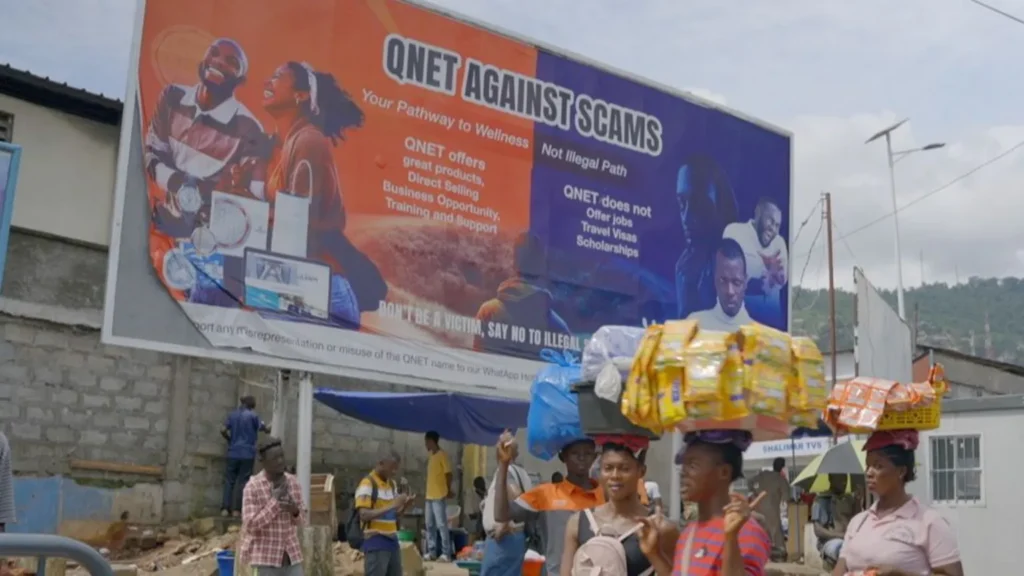
“The majority are Guineans. There is only one Sierra Leonean among them,” said Mahmoud Conteh, head of investigations for Interpol’s anti-trafficking unit in Sierra Leone, during a raid on a crowded safe house in Makeni, where they found victims as young as 14. Yet despite these rescues, reports show that between July 2022 and April 2025, Sierra Leone secured only four trafficking convictions, highlighting the difficulties of anti-trafficking.
Societal factors compound social injustice. Another survivor, whose name is Aminata, told the BBC how she was forced into sexual exploitation and scamming her own friends. After her escape, she was paralyzed by shame. “I was scared to go back home… I was thinking about all the money they’d given me,” she said. This internalized stigma means countless victims, like Musa’s daughter, disappear into silence, without any support.
The Long Fight Ahead
For Foday Musa, the wait continues; his son is still missing. The fight against such scams now depends not only on cross-border police work, but also on eliminating the stigma that breeds them. Only when victims can return home without fear will the true cost of these scams—broken families and silence—become known.
Source: https://www.bbc.com/news/articles/cx2w9q28xjxo